 how-to
How to Prevent Electrical Fires in Your Home
Last Updated: October 26, 2026
Quick Summary
To prevent electrical fires, inspect cords every season and replace any that are cracked, frayed, or stiff instead of taping them. Keep outlets within safe limits by plugging one high-wattage appliance into each outlet, never chaining power strips, and using extension cords for temporary use only. Treat warning signs like warm plates, buzzing, or burning smells as reasons to call a licensed electrician.
- Check every cord in your home once a season for cracks, exposed wire, and scorch marks.
- Never tape or splice a damaged cord back together; replace it instead.
- Keep space heaters and irons on their own dedicated outlet.
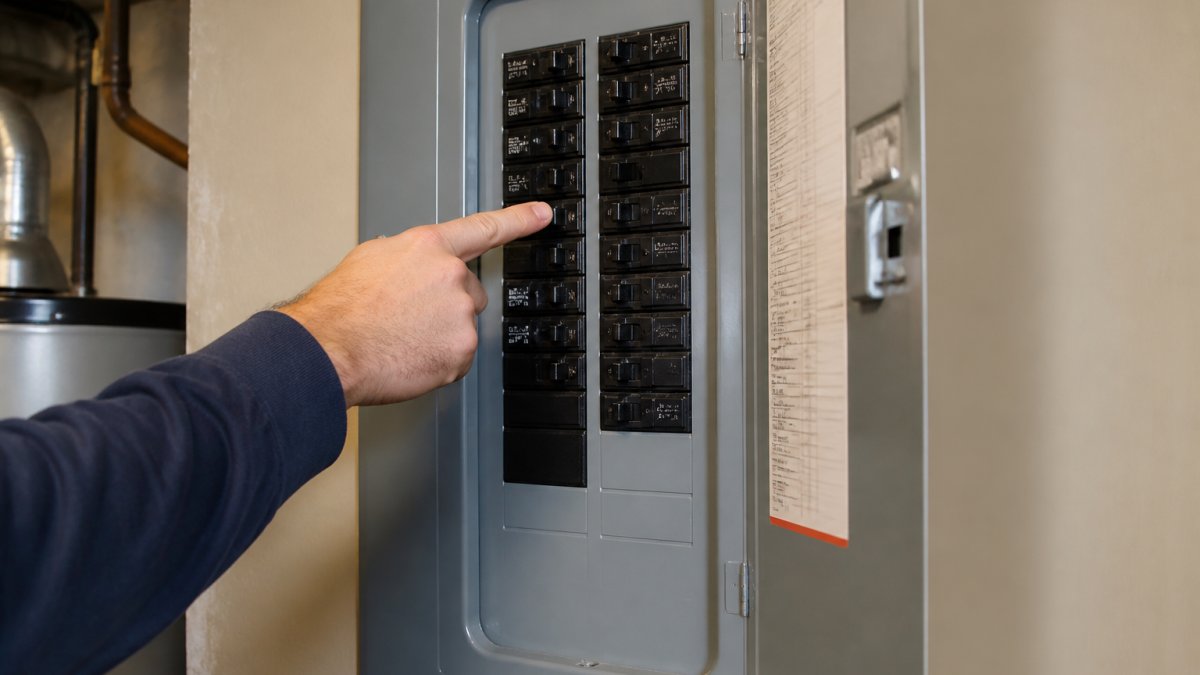
- If a breaker trips repeatedly, stop resetting it and call a qualified electrician.
- Never throw water on an electrical fire; use a Class C-rated extinguisher on small contained fires.
Table of Contents
- Step 1: Inspect Cords and Replace Damaged Wiring
- Step 2: Avoid Overloaded Outlets and Electrical Fires
- Step 3: Practice Extension Cord Safety
- Electrical Fire Warning Signs You Should Never Ignore
- Why a Home Electrical Inspection Matters
- Schedule Your Electrical Safety Walkthrough
- Frequently Asked Questions
Step 1: Inspect Cords and Replace Damaged Wiring
Learning how to prevent electrical fires starts with the cords you touch every day.
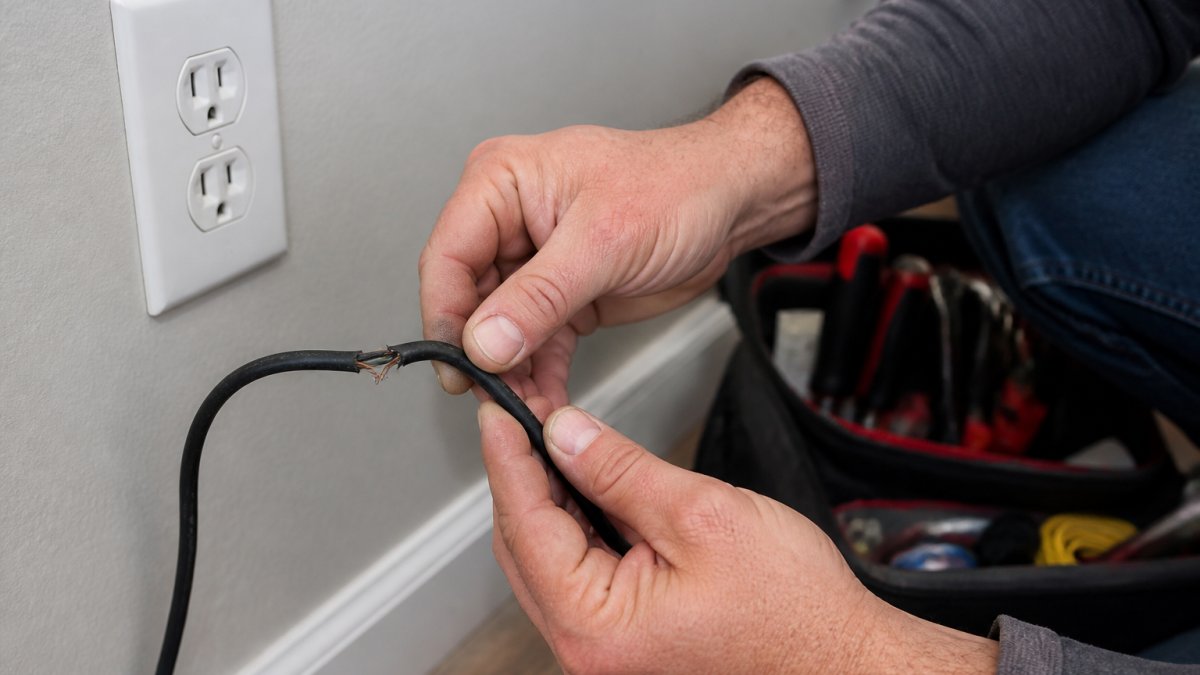
Check every cord in your home once a season. Look for cracks, exposed wire, scorch marks, and loose plugs.
- Run your hand along each cord and feel for nicks or soft spots
- Check where the cord meets the plug for bending and wear
- Look for discoloration on outlets and plug faces
Never tape a damaged cord or splice it back together. Replace it. A taped repair hides the damage but does not fix the heat risk inside the wire.
Step 2: Avoid Overloaded Outlets and Electrical Fires
Overloaded outlets and electrical fires go together more often than people realize. A wall outlet is built for a set amount of current, and every device you plug in adds to that load.
Follow these rules to keep outlets within safe limits:
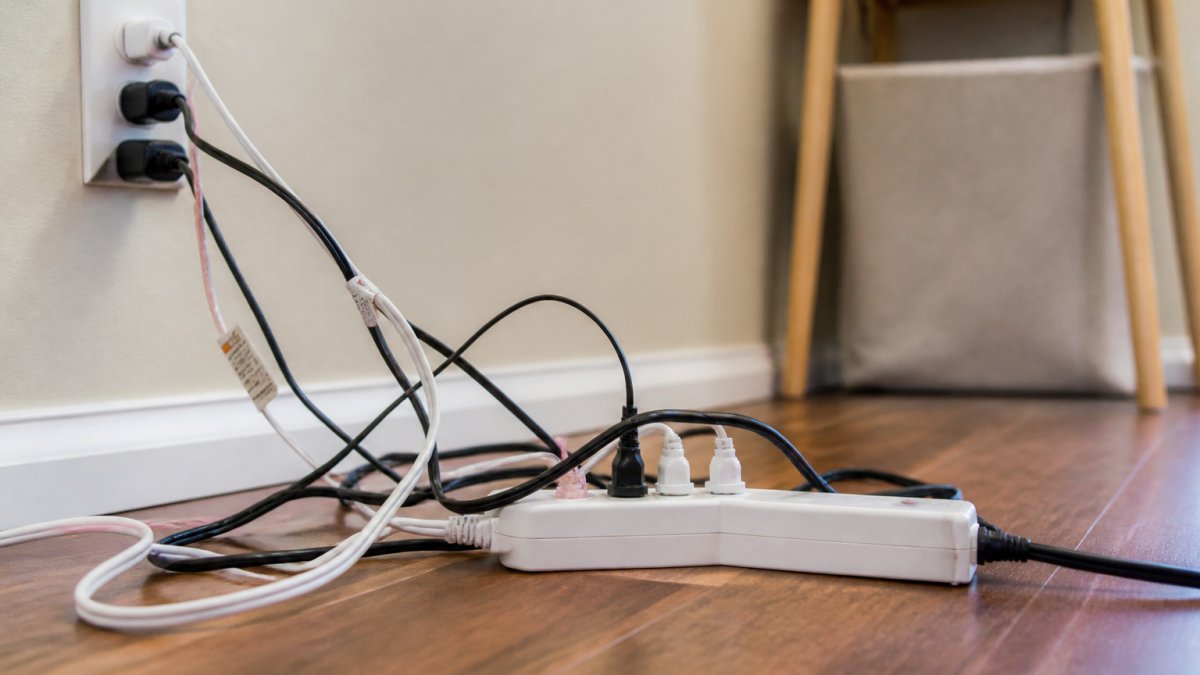
- Plug one high-wattage appliance into each outlet, not several
- Use power strips with built-in circuit breakers, not cheap blocks
- Never chain one power strip into another
If a breaker trips repeatedly, stop resetting it. The U.S. Consumer Product Safety Commission tracks electrical fire incidents and recommends calling a qualified electrician when breakers trip without an obvious cause.
Step 3: Practice Extension Cord Safety
Extension cord safety comes down to one principle: temporary use only. Extension cords are not a substitute for permanent wiring, and treating them like one is a leading cause of home fires.
- Use cords rated for the appliance's wattage
- Never run cords under rugs, carpets, or furniture
- Keep cords away from doorways and high-traffic paths
Extension cords left in place for months can overheat and degrade. A National Fire Protection Association safety guide makes the same point: cords are for short-term use, and permanent wiring belongs in the walls.
Electrical Fire Warning Signs You Should Never Ignore
Electrical fire warning signs are your early alarm system, and the difference between a close call and a loss usually comes down to what you do in the first few minutes. Most electrical fires start behind a wall or inside an outlet, so the signs you can see, smell, and hear are the only warning you get.
What each sign is telling you
- Burning or fishy smell near an outlet or switch. The fishy odor is overheated plastic insulation. The heat is coming from a connection or wire you cannot see, and it will not cool down on its own.
- Outlet or switch plate that feels warm or hot. A little warmth from a dimmer is normal; a plate that is hot to the touch, or warm when nothing is plugged in, points to a loose connection or an overloaded circuit.
- Flickering lights or dimming when an appliance kicks on. A brief dim when a large motor starts can be normal. Persistent flicker, or lights that dim every time the refrigerator or HVAC cycles, suggests a loose neutral or an overloaded circuit.
What to do, in order
- Stop using the device and the outlet. Unplug only if the plug is cool and the outlet is not sparking or smoking. Do not touch a hot plug with a bare hand.
- Shut off the circuit at the breaker panel if you can safely reach it. Label the breaker so the next person knows which circuit is off.
- If you see smoke, flames, or smell burning that does not stop, get everyone out, call 911 from outside, and do not re-enter. Electrical fires can re-ignite in a wall cavity after they appear out.
- If there is no smoke or flame, keep the circuit off and schedule a licensed electrician. Do not reset the breaker to "test" it, a breaker that trips again is doing its job.
When to call an electrician versus when to call 911
- Call 911 for any flame, active smoke, a burning smell you cannot trace, or a shock that knocked someone off their feet.
- Call a licensed electrician for a warm plate, a breaker that trips more than once, flickering that follows an appliance, buzzing, or scorch marks, even if everything still "works."
Our team answers common safety questions on our FAQs page so you know what to do next.
Here is what each warning sign means and what to do when you notice it.
| Warning sign | What it means | What to do |
|---|---|---|
| Burning or fishy smell near outlet or switch | Overheated plastic insulation from a hidden connection or wire | Stop using the outlet and schedule a licensed electrician |
| Outlet or switch plate warm or hot | Loose connection or overloaded circuit | Keep the circuit off and call a licensed electrician |
| Flickering lights or dimming when appliance kicks on | Loose neutral or overloaded circuit | Call a licensed electrician |
| Buzzing or crackling at an outlet | Buzzing is a loose connection; crackling is arcing | Call a licensed electrician |
| Scorch marks, brown discoloration, or melted plastic | Damage has already happened once | Call a licensed electrician |
| Sparks when you plug something in | Visible flash or pop means stop using that receptacle | Stop using the device and the outlet |
| Smoke, flames, or burning smell that does not stop | Active electrical fire that can re-ignite in a wall cavity | Get everyone out, call 911 from outside, do not re-enter |
Why a Home Electrical Inspection Matters
A home electrical inspection catches problems you cannot see. Wiring hides behind drywall, and by the time a fault shows itself, a warm plate, a tripped breaker, a smell, the damage may already be done. The purpose of an inspection is to find the conditions that cause fires before they produce a warning sign.
What a qualified electrician actually checks
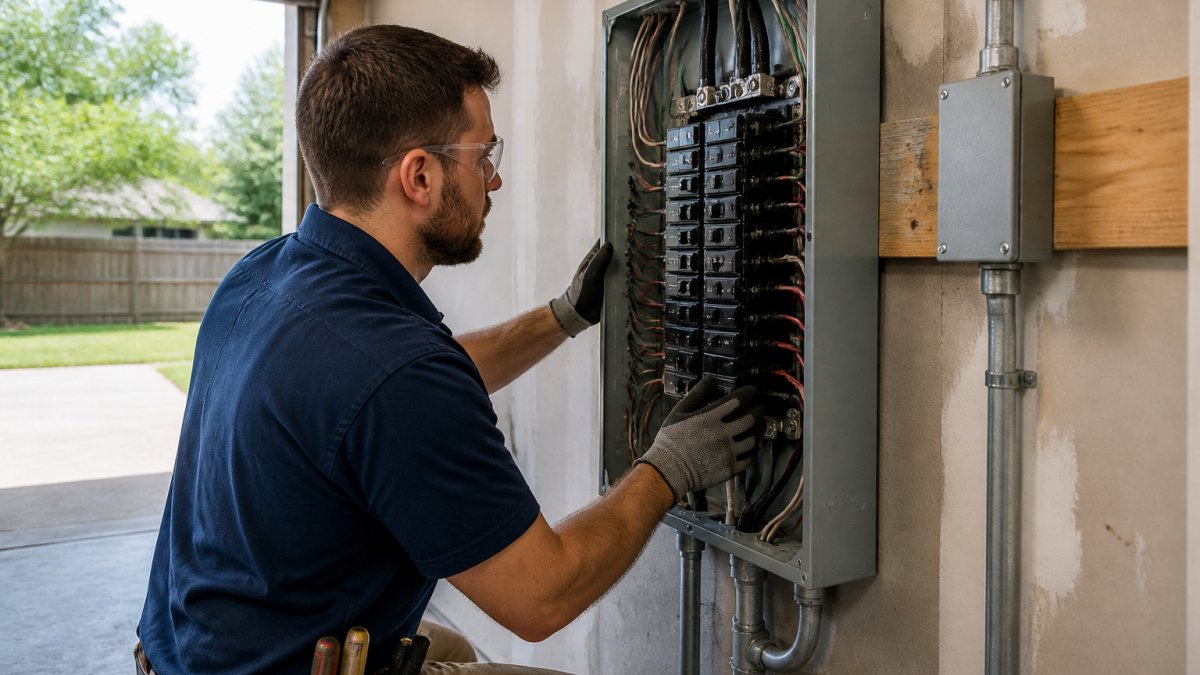
- The service panel. Breaker sizing and labeling, double-tapped breakers, corrosion, and whether the panel is rated for the home's actual load. Federal Pacific and Zinsco panels are common in older homes and are widely treated by electricians as a replacement priority.
- Grounding and bonding. A missing or compromised ground path is a shock and fire risk, and it is invisible at the outlet.
- Receptacles and switches. Loose connections, back-stabbed wiring, missing cover plates, and outlets that are not GFCI-protected where required (kitchens, baths, laundry, garage, outdoors).
Older homes and renters
Older homes carry more risk because wiring ages, insulation cracks, and panels fall behind modern demand. If you own an older home and have never had the panel opened, that is the first call to make.
Renters have less control but still have leverage:
- Report warning signs in writing to the landlord or property manager, a warm outlet, a breaker that trips repeatedly, buzzing, or a burning smell. Keep a copy.
- Do not "fix" anything yourself beyond unplugging a device. Modifying wiring in a rental can create liability and can void the owner's coverage.
- Ask when the last electrical inspection was done and who did it. A landlord who cannot answer is a reason to push.
- Use plug-in GFCI adapters in kitchens and baths if the outlets are not GFCI-protected, and keep space heaters on a dedicated circuit.
If you want to see the full scope of what we handle, review our electrical services for homes and small commercial spaces.
Schedule Your Electrical Safety Walkthrough
Knowing how to prevent electrical fires is mostly about catching small problems early.
At Go Coastal Electric, our licensed electricians provide custom design plans, professional project estimates, and expert installation for interior and exterior electrical needs.
Get started with Go Coastal Electric and protect your home with a safety inspection you can trust. Work with us to request your custom quote.
Frequently Asked Questions
What warning signs can indicate an electrical fire risk?
Watch for outlets that feel warm or show scorch marks, flickering lights, a burning smell near switches, buzzing sounds from outlets, and breakers that trip repeatedly. Frayed or cracked cords and discolored wall plates are also red flags. If you notice any of these electrical fire warning signs, stop using the affected circuit and have a licensed electrician inspect it before the problem grows.
Can overloaded outlets and extension cords cause electrical fires?
Yes. Plugging too many devices into one outlet or power strip draws more current than the wiring can handle, which generates heat and can ignite nearby materials. Extension cords used as permanent wiring are a common culprit because they overheat under continuous load. Keep high-draw appliances like space heaters on dedicated circuits, and never daisy-chain power strips. A home electrical inspection can confirm whether your circuits are properly sized.
How often should home electrical wiring be inspected?
Most homes benefit from a professional home electrical inspection every 10 years, and sooner if the home is over 40 years old or has had major additions. Signs like frequent breaker trips, warm outlets, or a burning smell warrant an immediate check. A qualified electrician can spot worn insulation, undersized wiring, and missing GFCI or AFCI protection before they become a fire risk.
What should I do if I see sparks or smell burning near an outlet?
Turn off the circuit at the breaker panel if it is safe to reach, then unplug nearby devices. Do not use the outlet again until an electrician inspects it. If you see flames or smoke, evacuate and call 911. Sparks and burning smells often point to loose connections or damaged wiring inside the wall, which is exactly the kind of problem that leads to electrical fires if left alone.