 how-to
Why Is My Circuit Breaker Tripping So Often?
Last Updated: October 25, 2026
Quick Summary
Frequent breaker trips usually mean an overloaded circuit, a short circuit or ground fault, or a worn-out breaker. A breaker is a safety switch that cuts power when current flow gets dangerous, so repeated trips are a warning, not a nuisance.
- An overload trips the breaker after devices run a while, not the instant you flip the switch.
- A short circuit is a hot wire touching neutral and trips instantly, often with a pop.
- Ground faults appear more in kitchens, bathrooms, outdoors, and anywhere water and wiring share space.
- Unplug everything on the circuit, push the breaker firmly to OFF, then back to ON.
- Stop and call a licensed electrician if the breaker trips immediately with nothing connected.
Table of Contents
- What Causes Frequent Breaker Trips?
- How to Reset a Tripped Breaker Safely
- When to Replace an Electrical Panel
- Frequently Asked Questions
What Causes Frequent Breaker Trips?
Frequent breaker trips usually mean an overloaded circuit, a short circuit or ground fault, or a worn-out breaker. A breaker is a safety switch that cuts power when current flow gets dangerous, so repeated trips are a warning, not a nuisance.
Overloaded Circuit Symptoms
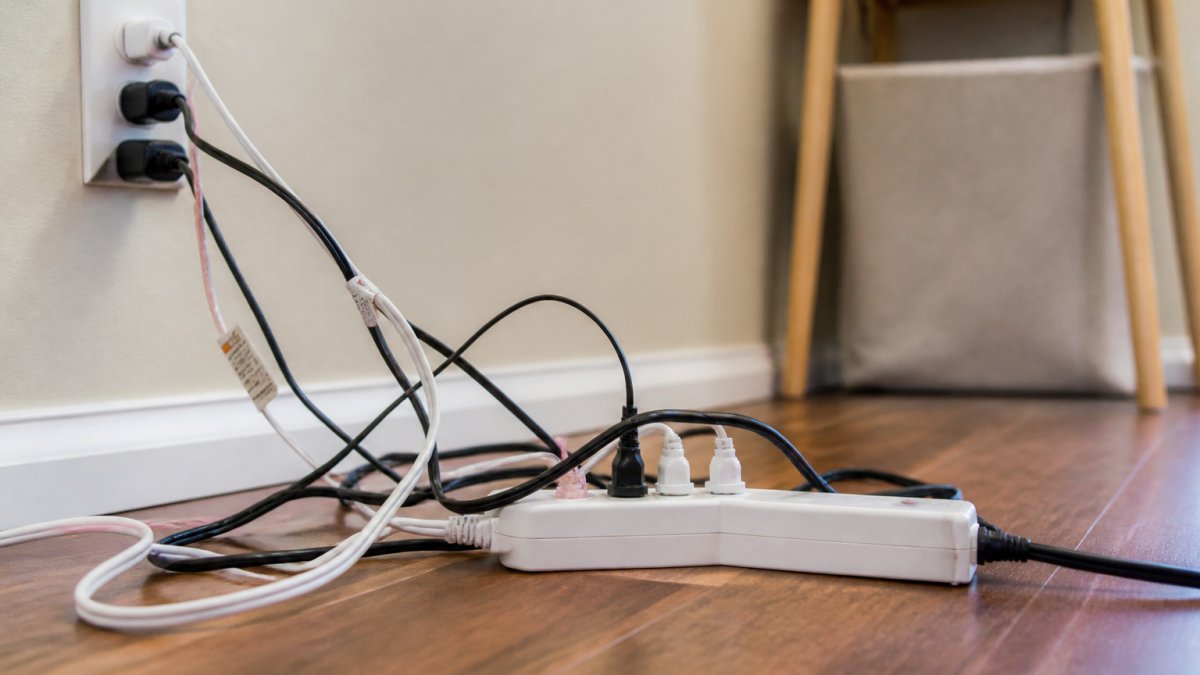
An overload happens when one circuit carries more load than it can handle, too many appliances on one circuit is the classic version. The breaker trips after the devices run a while, not the instant you flip the switch.
Signs include trips when a high-power appliance kicks on, lights dimming when the microwave or hair dryer starts, a warm panel near that breaker, and trips that stop when you unplug one device. Heat buildup is the real danger.
Short Circuit vs. Ground Fault
A short circuit is a hot wire touching a neutral wire: resistance drops, current spikes hard, often with a pop or scorch mark, and the breaker trips instantly.
A ground fault is a hot wire touching something grounded, like a metal box or a wet floor. Current leaks to ground instead of returning normally.
| Feature | Short Circuit | Ground Fault |
|---|---|---|
| What touches | Hot wire meets neutral | Hot wire meets ground |
| Trip speed | Instant, often with a pop | Fast, sometimes intermittent |
| Danger level | High fire risk | Shock risk to people |
Ground faults show up more in kitchens, bathrooms, outdoors, and anywhere water and wiring share space. Coastal humidity speeds up insulation damage, making this one common.
Arc Faults and Damaged Wiring
An arc fault is a spark jumping across a gap in damaged wiring or a loose connection. It does not always trip a standard breaker, arc faults run cooler and quieter than shorts but generate intense local heat.
Signs include a burning smell near an outlet or switch, discolored or warm faceplates, buzzing at a device, and lights flickering in one room only. Arc-fault circuit interrupters (AFCIs) are designed to catch this, a tripping AFCI is doing exactly its job.
Faulty Breakers and Loose Connections
Sometimes the breaker itself is the problem. Breakers age, the internal mechanism weakens, and the breaker trips below its rated capacity. One that trips with almost nothing running is a prime suspect.
Loose connections cause a different failure: a loose wire raises resistance at the terminal, resistance makes heat, and heat makes the breaker trip, a fire risk even when the breaker holds.
How to Reset a Tripped Breaker Safely
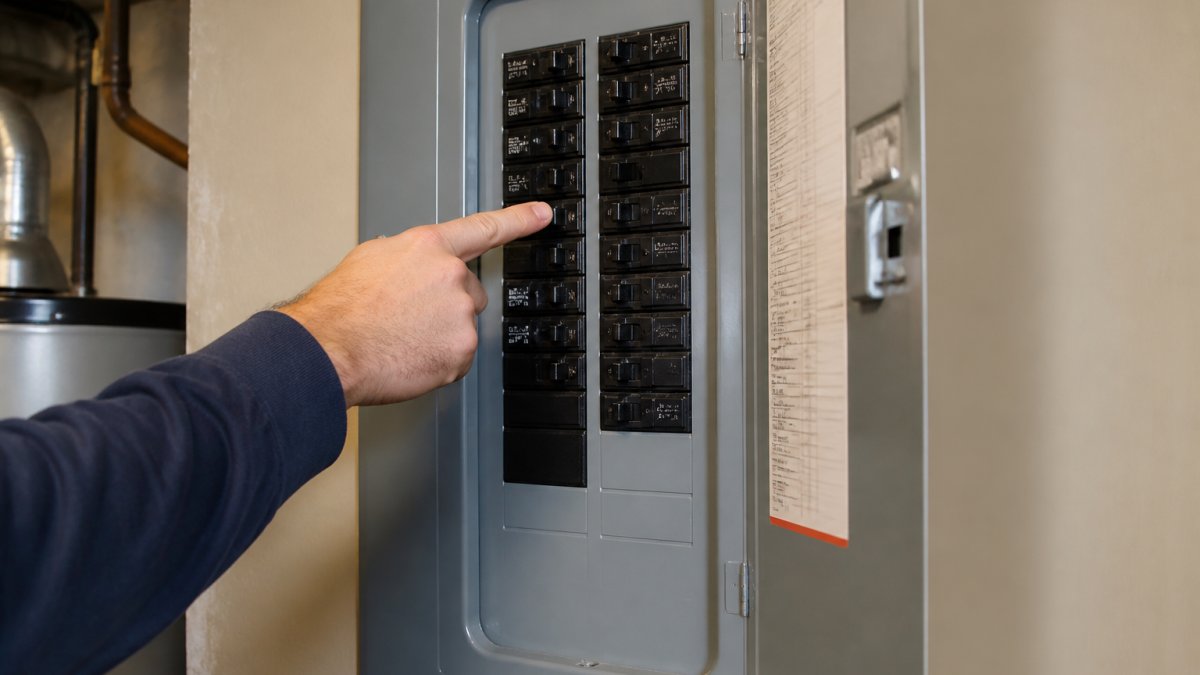
Unplug everything on that circuit, find the tripped breaker (it sits between ON and OFF, or fully OFF), push it firmly to OFF, then back to ON. If it trips again with nothing plugged in, stop and call a licensed electrician.
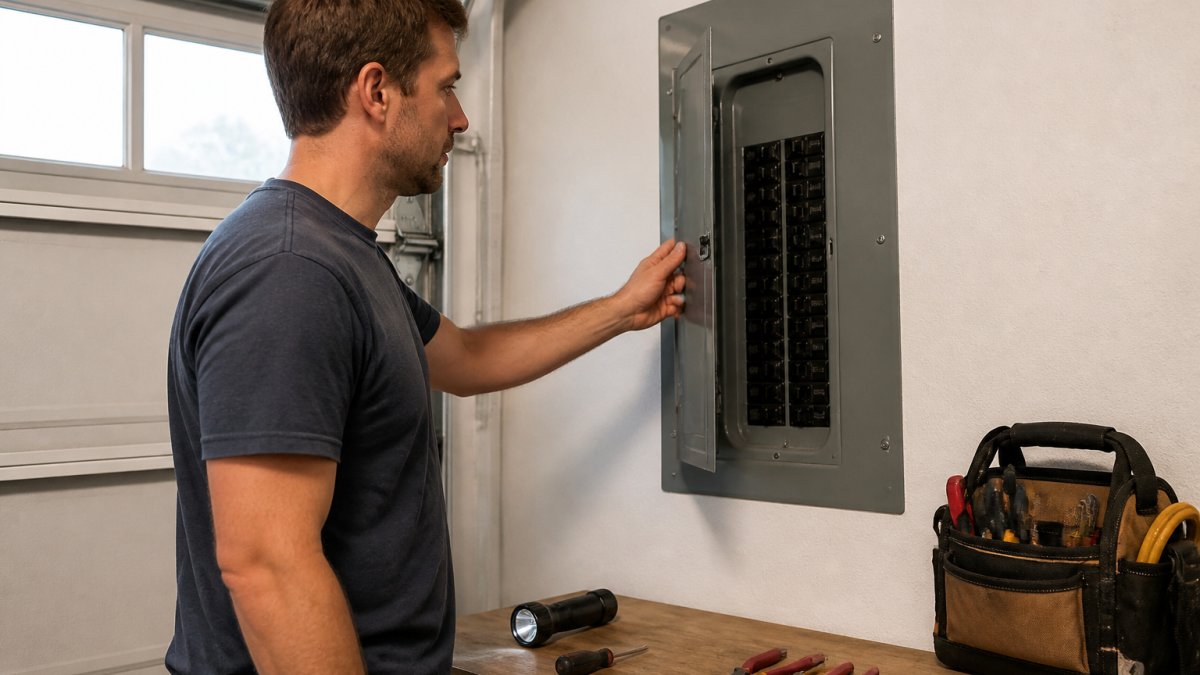
If the breaker holds empty but trips the moment you add one appliance, the appliance or its cord is the issue. If it trips with the circuit empty, the wiring or breaker is the issue.
When to Stop and Call
Stop and call a licensed electrician if the breaker trips immediately with nothing connected, you see scorch marks, smoke, or smell burning, the panel feels hot, the main breaker trips too, or any shock occurs at an outlet or switch. Electrical safety is not a DIY category past this point. For quick answers, our electrical FAQs cover the basics homeowners ask most.
When to Replace an Electrical Panel
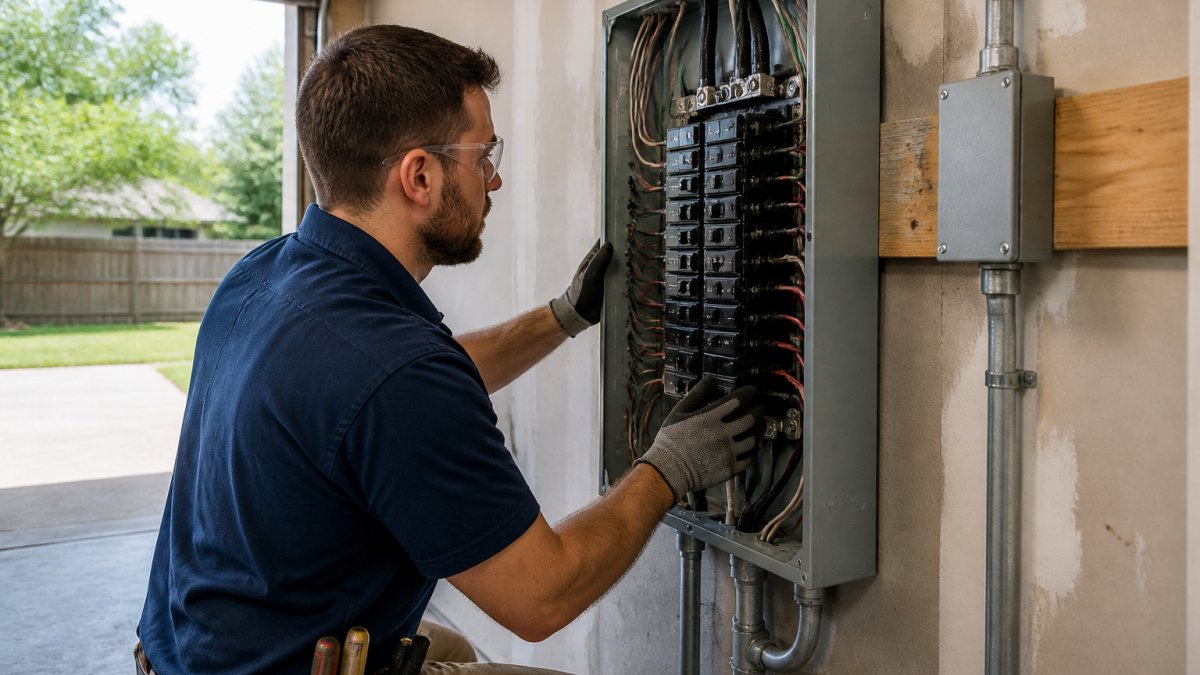
An electrical panel needs replacement when it cannot safely carry your home's load, is a known failure-prone type, or breakers trip constantly despite correct circuit loads. Age alone is not the trigger, capacity and condition are.
Signs it is time for a panel upgrade: breakers trip often with normal use, the panel is full with no room for new circuits, you are adding an EV charger, generator, or major appliance, there is rust, moisture, or scorch marks inside, lights flicker across the whole house, or the panel brand has a history of failures. If you are weighing a replacement, work with licensed electricians for a real assessment of your panel's capacity before you commit.
Pricing depends on your panel's size, age, and the work required. We give professional project estimates upfront so you know the scope before work starts.
Frequently Asked Questions
Is it safe to reset a tripped breaker?
Resetting a breaker once is generally safe if you first unplug the devices on that circuit and confirm the panel is dry and undamaged. Stand to the side, use one hand, and flip the switch fully to OFF before pushing it back to ON. If the breaker trips again immediately, stop resetting it. Repeated breaker trips signal an underlying electrical fault, and continuing to reset it raises fire risk. Call a licensed electrician to inspect the circuit.
How can I tell if a circuit is overloaded?
Overloaded circuit symptoms include the breaker tripping when you run a high-power appliance like a hair dryer or space heater, warm outlet covers, flickering lights, and a burning smell near the panel. Add up the wattage of devices on the circuit and compare it to the breaker's capacity. If trips happen mainly when multiple appliances run at once, the load is too high for that branch circuit.
When should I call an electrician about a breaker that keeps tripping?
Call a licensed electrician if the breaker trips repeatedly after a reset, if it trips with nothing plugged in, if you notice scorch marks or a burning smell, or if the main breaker trips while branch circuits look unloaded. These point to damaged wiring, a ground fault, or a failing panel. A professional can inspect the electrical panel, test for loose connections, and tell you whether repair or replacement is the safer path.
A breaker that trips once is a fluke. A breaker that trips weekly is telling you something. Go Coastal Electric handles panel assessments and upgrades across the Gulf Coast with licensed electricians, custom design plans for every home, and clear estimates before any work begins. Get started with Go Coastal Electric and find out exactly what your panel can handle.